
Meet Dr. Brendan McLaughlin
You shouldn’t have to keep translating your story for one more practitioner.
When the labs, symptoms, history, and lived experience have been separated into different files, Dr. McLaughlin’s work begins by bringing them back into one clinical picture.
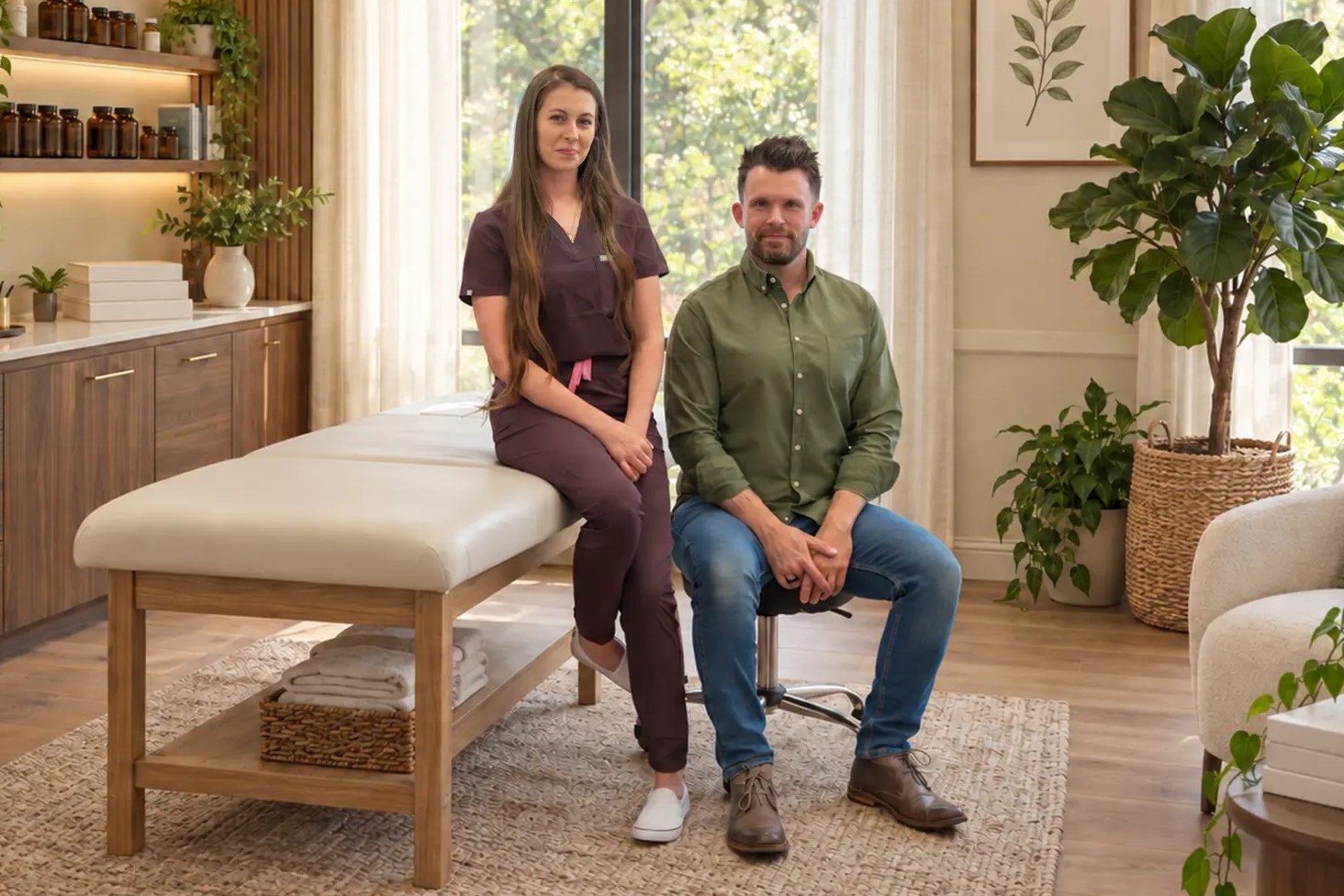
Where it began
Curiosity came before credentials.
Dr. McLaughlin grew up in a rural home where food, plants, and everyday health were closely connected. Books by Andrew Weil introduced him early to the idea that medicine could ask broader questions.
That curiosity led to doctoral study, anatomical research, and nearly two decades of additional training across medical acupuncture, Chinese herbal medicine, neurology, homeopathy, nutrition, and nervous-system assessment.
“I’ve been looking at only part of the picture.”
That realization during advanced Autonomic Response Testing training changed the question from “Which protocol fits this symptom?” to “How do these systems and patterns relate?”
A wider clinical lens
Depth is useful only when it creates clarity.
Each discipline added another way to observe the same person. Today, those perspectives are not offered as a menu of treatments. They are used together to identify what deserves attention first, what can wait, and what may not be necessary.
Functional Medicine
Chinese herbal medicine
Functional neurology
Homeopathy
Biomedical acupuncture
Autonomic Response Testing
When it became personal
The limits of disconnected care were not abstract.
Dr. McLaughlin’s wife, Megan, has publicly shared her experience with autoimmune flare-ups, changing diagnoses, difficult treatment decisions, and the exhaustion of trying to make sense of conflicting answers.
Walking beside her reinforced something that now shapes every complex case at Aquarian: a person does not need another isolated opinion. They need someone willing to study the full record, ask what has been missed, and make the sequence understandable.
Megan’s story is her personal experience. It does not predict another person’s clinical outcome.
Listen to their conversation
From Flare-Ups to Freedom
A conversation with Megan · 0:00
Watch their conversation
How he works
Precision before protocol. Sequence before intensity.
Investigate
Look across testing, symptoms, exposures, history, and prior responses instead of reading each item alone.
Synthesize
Consider biology and nervous-system patterns together, with context for how the case developed over time.
Sequence
Turn a dense clinical picture into a practical order: what first, what next, and what can wait.
Your starting point
Choose the level of support you’re looking for.
A short assessment will help you compare personalized data + direction with comprehensive investigation + partnership.